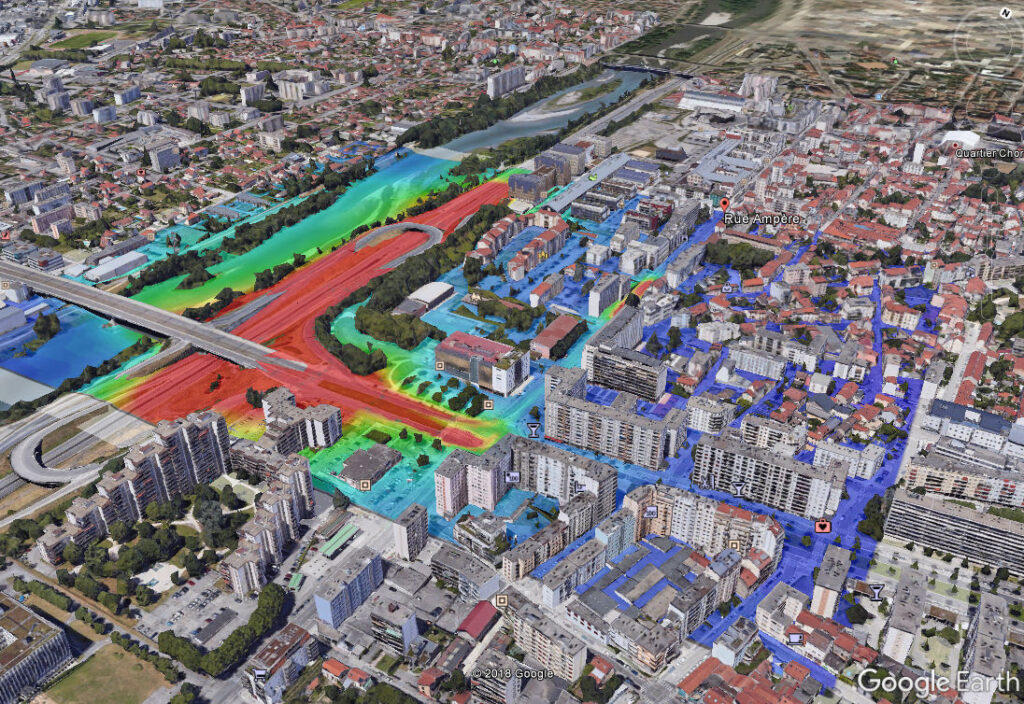
Road traffic impact on the air quality
A large number of industrial accidents start as a leak of a toxic or flammable gas in atmosphere. Controlling the risk involves the right assessment of the extent of the gas cloud from any leaking equipment or storage tank for both onsite and offsite effects. We can help you in assessing the hazardous consequence of toxic and flammable release with our abilities in 3D dispersion modelling in complex geometries. Our high-experienced consultants will ensure you the best approach for your dispersion case studies in the following fields:
- Flammable gas dispersion
- Toxic gas dispersion
- Radionuclides dispersion
- Safety measures design and performance analysis
- Gas sensor layout optimization (smoke, toxic gas, flammable gas)
- Leaks identification by inverse modeling
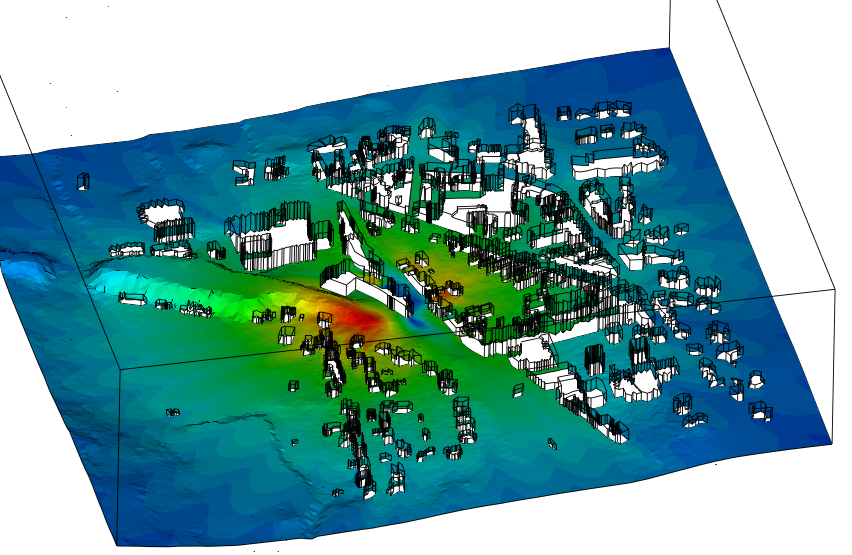
Industry emission impact
Industrial facilities (e.g. manufacturing factories, mines, oil refineries, waste incinerators, water treatment plants, chemical and pharmaceutical plants, food industry, etc.) contribute to local air pollution, especially in urban environments. Major health consequences to air pollution can occur as a result of short- or long-term exposure. Our consultancy team can assist you in the following fields:
- Pollutant emissions inventory
- Regulatory compliance analysis
- Gas/particle atmospheric dispersion modelling
- Simulation of the dry and wet deposition around plants
- Optimization of the emission areas by CFD-3D based atmospheric disperion model
- Plume visibilty assessment
- Legionella dispersion modelling
- Radionuclides dispersion simulation
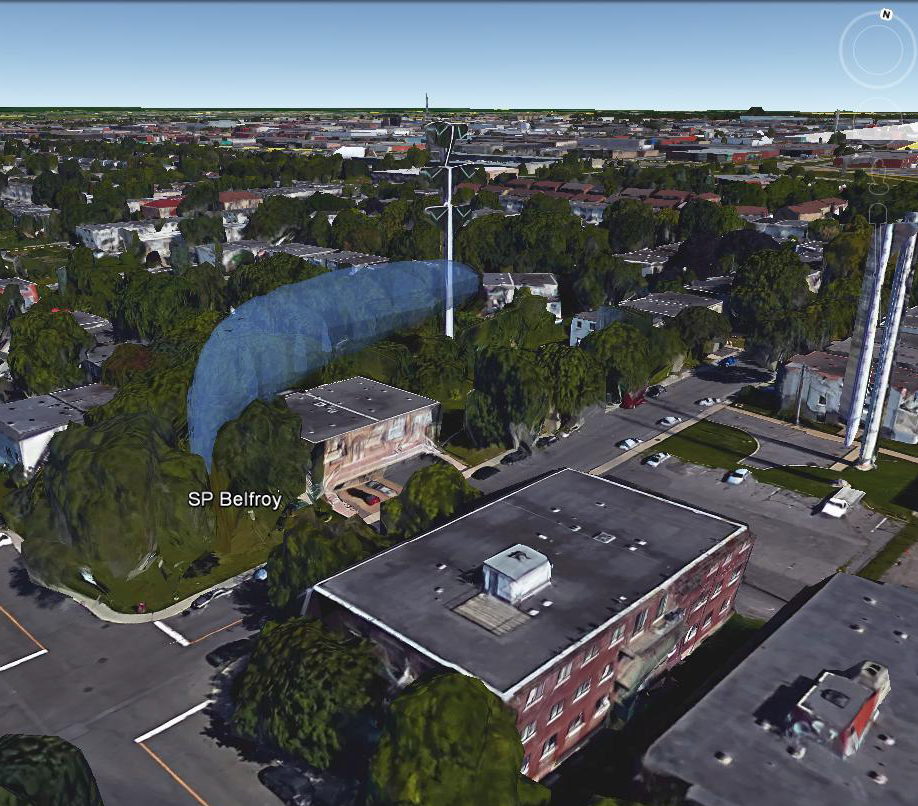
Odour impact
Odour emissions play an important role in the perception of an healthy environement by surrounding people, as they deeply affect the quality of life. Odourous industrial plants really affect the acceptability of such activities and business reputation because of population complaints in the nearby residential areas. Our consultancy team can help you to manage the odour impact and assist you in the following fields:
- Odour exposure modeling by CFD-3D based dispersion model
- Odour complaints analysis
- Odour emissions retrieval by inverse modeling
- Performance analysis of odour reduction measures by dispersion mode
- Real time odour impact monitoring
- Predictive simulation of odour impact
- Optimization of the odour sensor layout
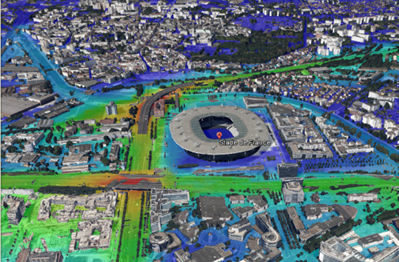
Urban air quality
Air quality is now considered as one of the critical problematic of urban population and remains the number one environmental cause of death in many parts of the world. Environmental policies focus on developing a clean air acts and regulation authorities try to implement innovative measures. Our high-experienced consultants can offer you:
- Modelling of the urban air pollution related to various pollutant source inventories (industry, roads, heating, harbour…)
- Air impact assessment of various urban project from local scale to city scale
- Odour emissions retrieval by inverse modeling
- Regulatory compliance of the urban air quality
- Health benefits of various regulation measures (traffic speed regulation, traffic reduction, vehicles selection criteria…)
- Air quality measurement campaigns
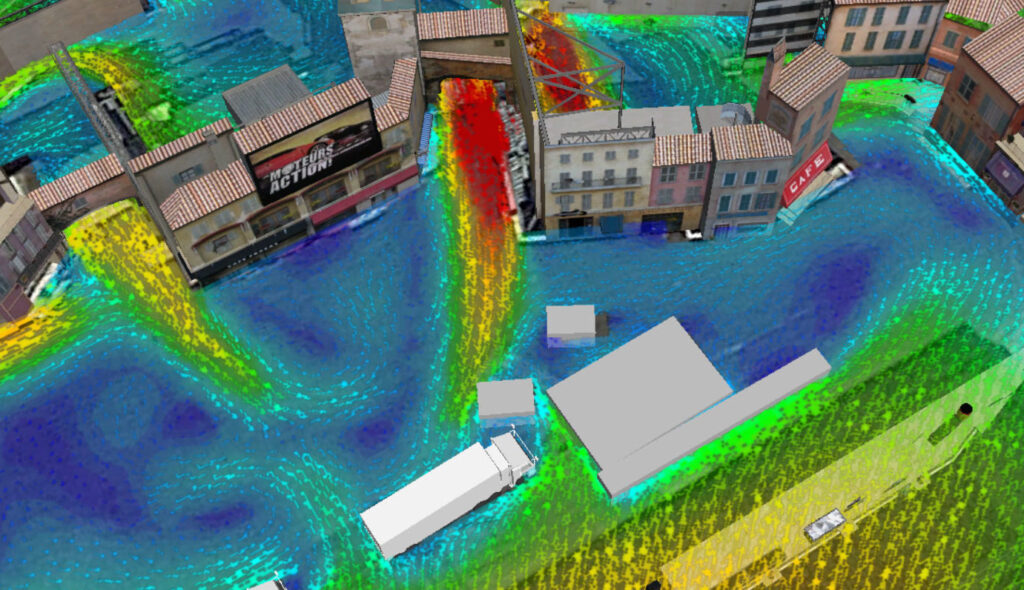
Wind flows in urban areas
In the complex geometries of high-rise buildings in urban areas, the wind flow patterns can be very different from the meso scale wind. Architects, local authorities, urban planner are interested in managing the local aerodynamic effect and in optimizing the pedestrian comfort around buildings. The knowledge of the local wind characteristics in such an urban context can be used to assess the natural ventilation to design bioclimatic to prevent heat islands or passive buildings as well as the wind potential to optimize local wind energy production. Our high expertise can help you in.
- Wind flow patterns by CFD-based modelling
- Wind characteristics assessment (direction, average speed, turbulence intensity, pressure on buildings, …)
- Improvement of the pedestrian comfort around buildings
- Local climatology analysis
- Validation of natural ventilation in buildings
- Local wind production assessment for urban wind turbines